A Vision Built Around Human Dignity
Building a Future Worth Believing In.
This independent digital concept presents a humanitarian vision where education expands opportunity, healthcare protects dignity, clean water strengthens communities, and innovation turns complex challenges into practical possibilities.
Independent digital concept: This website is a creative informational presentation and is not an official government, royal, charitable, or institutional website unless separately authorized and verified. Do not use it to solicit donations, personal information, or financial contributions without appropriate legal authorization.
Our Royal Legacy
From compassion to continuity.
Meaningful humanitarian work is not defined by a single campaign. It is built through values, responsibility, institutional learning, community participation and a commitment to making every intervention count.
A lasting humanitarian legacy begins with a simple principle: people should be treated with dignity before they are treated as statistics. The strongest development programs therefore look beyond immediate relief and consider what allows families and communities to become more resilient over time. Education can open pathways that did not previously exist. Healthcare can protect a person’s ability to learn, work and participate. Safe water can improve daily life while reducing preventable risks. Innovation can connect knowledge with practical solutions. Together, these priorities create a framework in which compassion is matched by planning, measurement and responsibility.
This digital concept uses the language of legacy to describe continuity rather than to imply an institutional history that has not been independently established. Its timeline is therefore presented as a strategic storytelling framework: values emerge, priorities become clearer, partnerships expand, evidence improves, and future generations inherit stronger systems. The objective is not to celebrate activity for its own sake, but to imagine humanitarian work that leaves communities with greater capability than they had before.
Human dignity first
The starting point is a culture of compassion, responsibility and respect for the people humanitarian programs are designed to serve.
From relief to resilience
Programs connect immediate support with education, healthcare, livelihoods, infrastructure and long-term community capability.
Partnership without borders
Governments, researchers, local organizations, volunteers and responsible businesses can combine expertise when community needs are clearly defined.
Impact that outlives a campaign
The ultimate measure is whether people and institutions are better equipped to continue progress after an individual initiative ends.
Four Global Pillars
Four priorities. One human purpose.
Humanitarian development becomes stronger when essential priorities are connected. The following four pillars create a framework for thinking about opportunity, dignity, resilience and responsible innovation.
Pillar 01
Education
Knowledge is one of the most durable forms of opportunity.
Opening doors through knowledge
Education can transform a person’s choices long after a particular program has ended. A meaningful education strategy should address access, quality, inclusion, digital literacy, teacher development and the conditions that allow students to remain engaged. It can connect children with opportunity while also giving adults practical skills for changing economies. The strongest approach respects local knowledge and community priorities rather than imposing one universal model. Partnerships with educators, researchers and local institutions can help turn resources into lasting capability.
Pillar 02
Health
A healthy community has greater capacity to learn, work and recover.
Protecting dignity through care
Healthcare is more than emergency treatment. It includes prevention, awareness, maternal and child wellbeing, accessible primary care, sanitation, mental wellbeing support and stronger local health systems. Humanitarian health initiatives can be most effective when they strengthen existing capacity rather than creating fragile parallel structures. Responsible programs listen to communities, work with qualified professionals and measure outcomes carefully. By placing people at the center, health becomes a foundation for education, livelihoods, family stability and long-term resilience.
Pillar 03
Water
Safe water is a foundation for health, dignity and resilient communities.
A resource that changes everything
Access to safe water influences health, hygiene, education, household time and community productivity. Sustainable water initiatives require more than installing infrastructure. They require careful assessment of local conditions, maintenance plans, community ownership and responsible environmental management. Appropriate technology can help monitor quality and reliability, while local participation can strengthen long-term stewardship. A successful project should be understood not simply as a structure delivered to a community, but as a service that remains safe, useful and maintainable for the people who depend upon it.
Pillar 04
Innovation
Better tools can help humanitarian ideas travel further and work smarter.
Technology with a human purpose
Innovation matters when it solves a real problem. In humanitarian development, technology can improve logistics, education, health communication, water monitoring, data collection and coordination between partners. Yet technology should never become the objective itself. Responsible innovation begins with listening, protects personal data, considers affordability and evaluates whether a solution works in real conditions. Collaboration between communities, universities, entrepreneurs, public institutions and humanitarian organizations can turn ideas into tools that are practical, scalable and accountable.
Long-Term Framework
Strategy 2030
Strategy 2030 is imagined as a people-centered framework for turning humanitarian ambition into measurable, sustainable progress. Its first principle is continuity: initiatives should be designed with the future in mind rather than ending when initial funding or attention disappears. The second is evidence: programs should establish clear objectives, measure meaningful outcomes and learn openly from what works and what does not. The third is partnership, bringing together local leaders, educators, healthcare professionals, researchers, technology specialists and responsible institutions. The fourth is resilience, ensuring that communities have knowledge, infrastructure and systems capable of adapting to changing circumstances.
Human-centered design
Begin with real needs, local knowledge and measurable improvements in people’s lives.
Measure what matters
Track meaningful outcomes rather than relying only on activity counts.
Build capable networks
Bring complementary expertise together while respecting local leadership.
Design beyond the moment
Strengthen systems so communities can continue adapting after individual projects end.
Impact Stories
Every number represents a human story.
The stories below are illustrative narratives rather than claims of verified foundation beneficiaries. They demonstrate the type of human-centered storytelling a responsible humanitarian organization can use to explain impact.

The classroom that became a horizon
Imagine a rural learning center where students once studied with limited resources. A coordinated education program could bring teacher training, digital learning tools, books and community involvement together. The lasting change would not simply be a new classroom. It would be the confidence of students who begin to see education as a pathway toward possibilities their families had once considered unreachable.
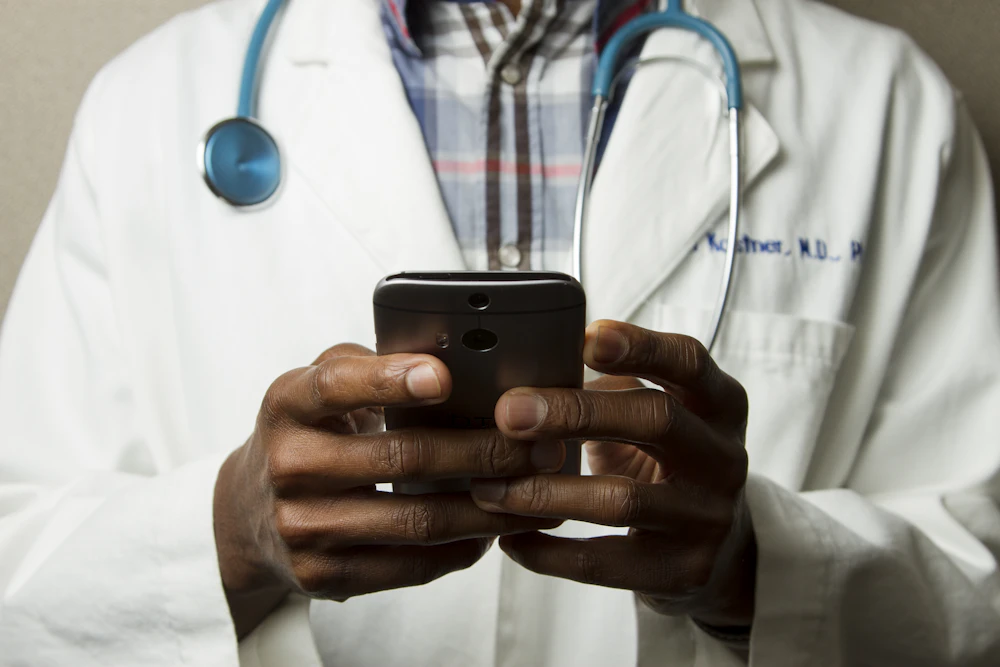
Care that restores confidence
Consider a community where distance and cost make routine healthcare difficult. A mobile outreach model, designed with qualified professionals and local partners, could bring preventive services closer to families while connecting serious cases to established medical systems. The deepest impact may be measured in ordinary moments: a parent receiving timely advice, a child receiving appropriate care, or a family gaining confidence that help is within reach.

A resource that gives time back
Safe water can change the rhythm of an entire household. When families spend less time searching for reliable sources, that time can return to education, work, childcare and community life. A sustainable water initiative would therefore be designed around quality, maintenance, local ownership and long-term reliability, turning infrastructure into a service that continues to support daily dignity.
Impact Philosophy
Measure the change, not just the activity.
Responsible humanitarian communication should distinguish between what was delivered and what actually changed. A program may distribute resources quickly, but its deeper value depends on whether people gained safer conditions, stronger skills, improved access or greater resilience. This philosophy encourages transparent reporting, thoughtful evaluation and continuous learning.
*Illustrative website concept metrics, not verified organizational statistics.
Knowledge Center
Frequently Asked Questions
Clear information builds trust. These questions explain the humanitarian framework represented by this independent digital concept.
This page is an independent informational concept presenting a humanitarian vision centered on education, health, water, innovation and community development.
The framework highlights education, healthcare, clean water, innovation and broader community resilience as connected areas of humanitarian development.
Education strengthens knowledge, opportunity, confidence and long-term community capacity. Quality education can help people make informed decisions and participate more effectively in social and economic life.
Health affects a person’s ability to learn, work, care for family and participate in community life. Humanitarian health work can combine prevention, access, awareness and stronger local systems.
Safe water supports health, hygiene, education and daily dignity. Sustainable projects also need maintenance, local ownership, quality monitoring and responsible environmental planning.
Technology can improve coordination, education, logistics, health communication, monitoring and access. Innovation is most useful when it solves a clearly defined problem while protecting privacy and remaining practical.
In this concept, Strategy 2030 represents a forward-looking framework emphasizing sustainable development, measurable outcomes, partnerships, innovation and community resilience.
Participation can include volunteering, local leadership, knowledge sharing, community consultation, research and responsible partnerships with verified organizations.
Organizations can contribute expertise, research, technology, logistics, educational resources, qualified professionals and responsible funding through properly verified partnership channels.
No. This page is an independent digital concept. It must not be represented as an official government, royal, charitable or institutional website without appropriate authorization and verification.
Join the Legacy
Stay connected to meaningful ideas.
Receive occasional updates about humanitarian thinking, community development, education, responsible innovation and practical approaches to sustainable impact.